Brochure "Insect house"
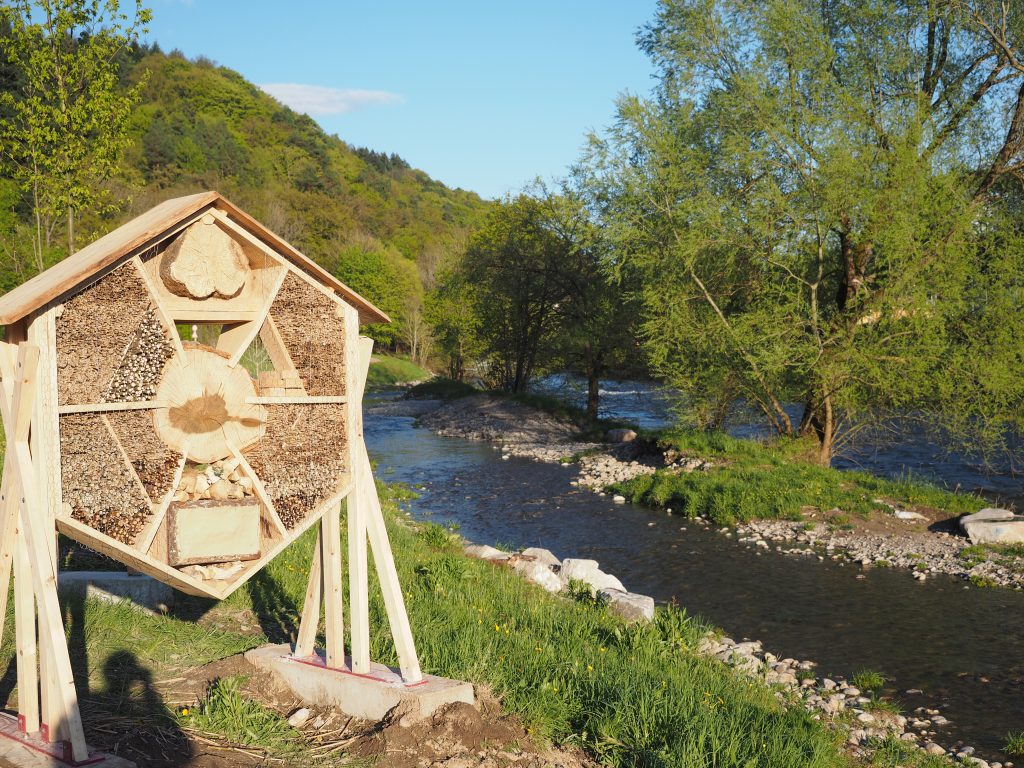
The brochure explains the importance of insect houses as nesting and overwintering sites for solitary wild bees and wasps. It describes the ecology and benefits of these insects, including their role in pollination and natural pest control. It also provides practical advice on how to build suitable insect houses, choose appropriate nesting materials, and create bee-friendly habitats in gardens.
🇩🇪 This document is in German.
Handout "How to make and manage a bee hotel"
The handout How to make and manage a bee hotel explains the ecology of solitary wild bees and their importance as pollinators. It provides detailed, step-by-step instructions for building a bee house using recycled wood or logs, including guidance on hole sizes, suitable materials, and proper placement in a sunny location. The handout also describes which bee species may use the nesting structures and emphasises regular maintenance to prevent mould, pests, and parasites. It combines practical advice with ecological information to help readers create and maintain suitable nesting habitats for wild bees.
Podcast "Insect hotels - Helpful or just a feel-good gesture?"
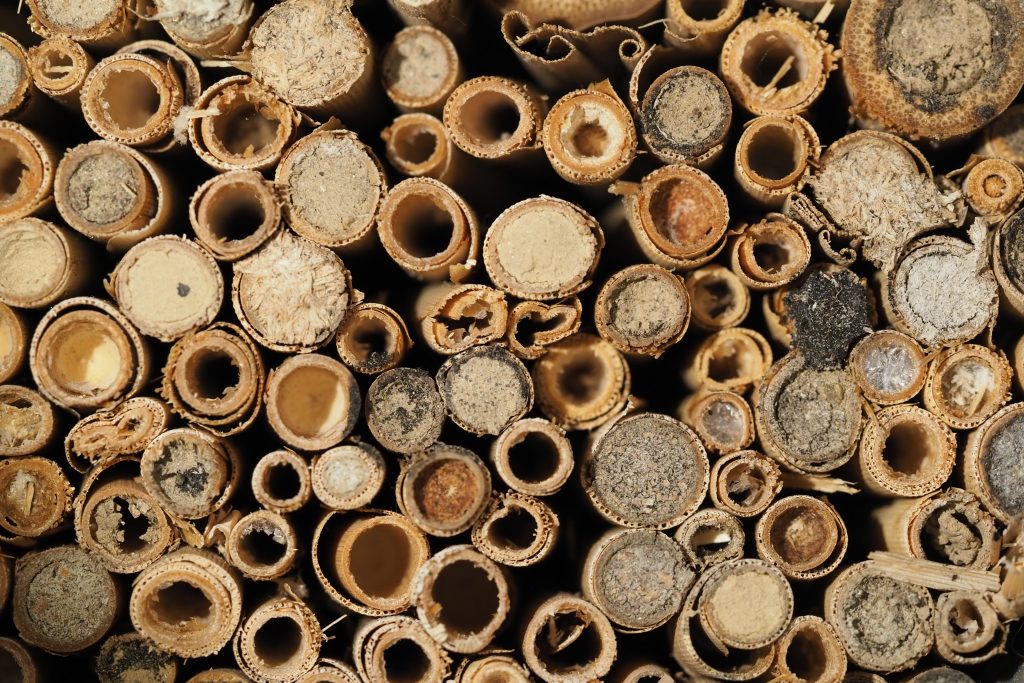
The podcast episode Insect hotels – Helpful or just a feel-good gesture?” from Quarks Daily examines whether insect hotels genuinely contribute to insect conservation. It highlights that insect hotels alone cannot solve the decline in insect populations. Instead, effective conservation requires broader measures, such as protecting natural habitats, providing diverse native flowering plants, and improving conditions for insects in gardens and other landscapes.
🇩🇪 This podcast is in German.
Book "Identifying wild bees and wasps in nesting aids"
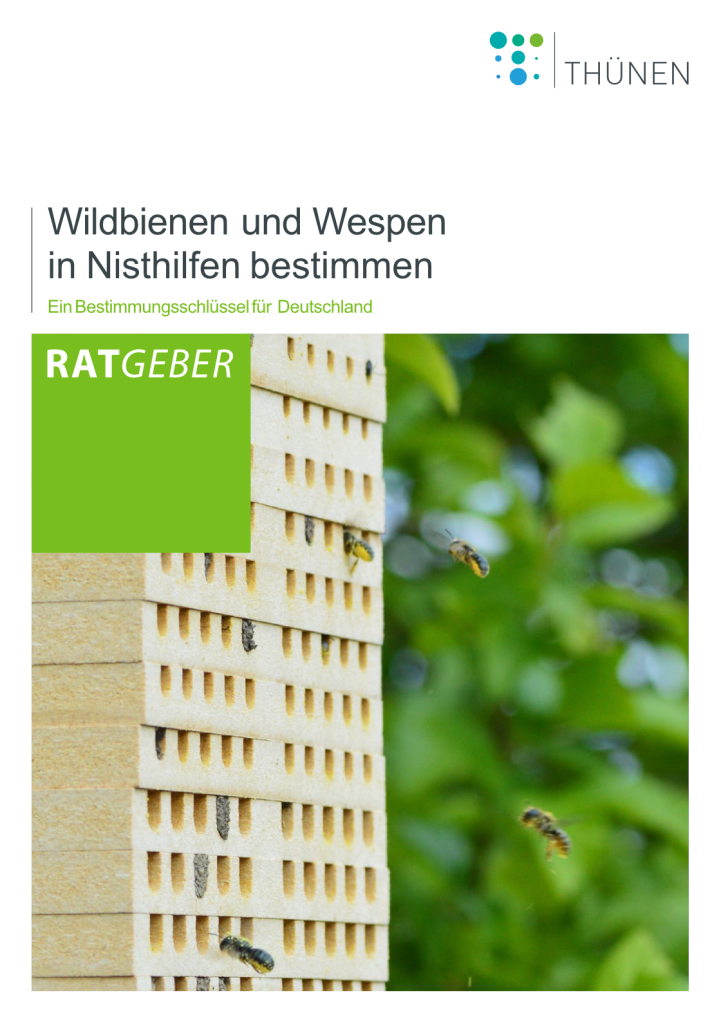
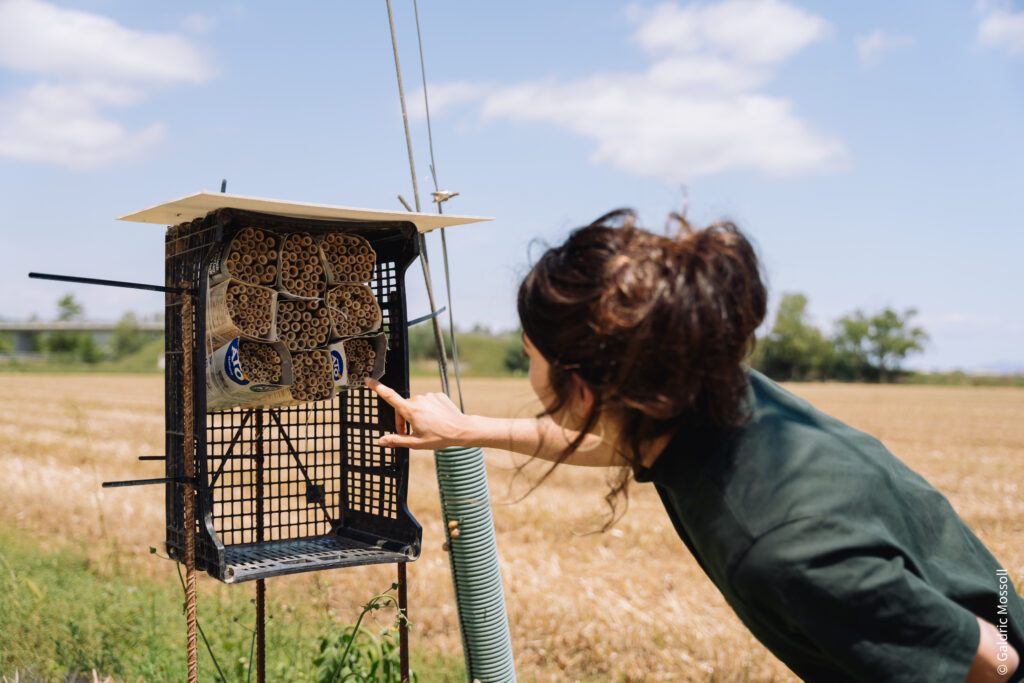
Wild bees and wasps in nesting aids: An identification key for Germany is a practical identification guide developed by the Thünen Institute. It helps readers identify cavity-nesting wild bee and wasp species, as well as their natural enemies, by examining the nesting materials and brood cells found in artificial nesting structures such as bee hotels. The book includes detailed descriptions, photographs, and identification features for 187 species in Germany.
🇩🇪 This book is in German.