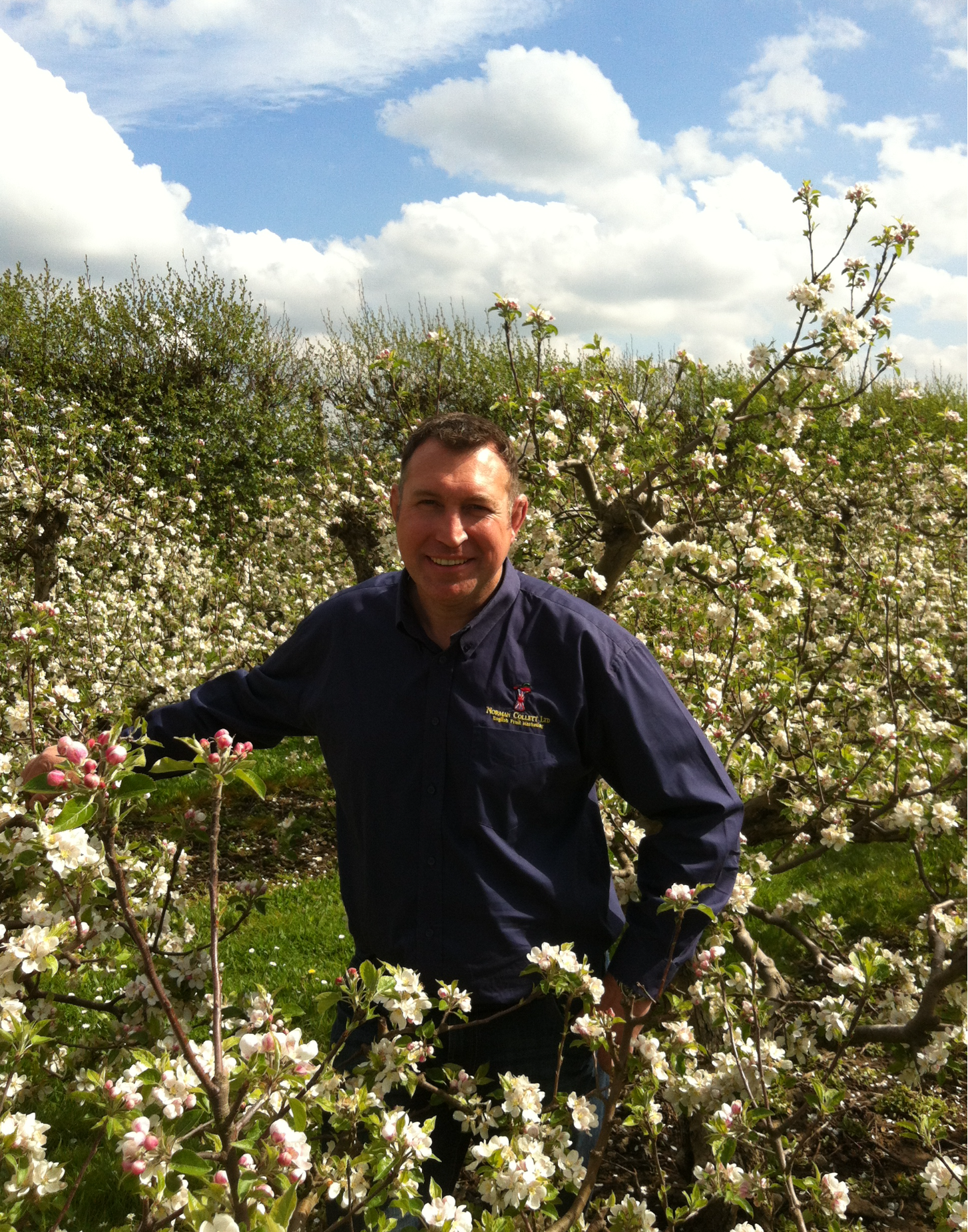
Researchers at the University of Reading, along with partners AVALON Fresh, engaged farmers and a local conservation group are studying the restoration of pollinator habitats in apple orchards in Kent. They host meetings each year and plan a wider outreach event in 2026. In February 2025, they hosted a flower margin training event and workshop in the LL to share knowledge and plan surveys and activities for the coming year.
Activities within the Living Labs
Within the Living Lab network, we are conducting an array of different activities at different levels. These include:
Level 1
The center level contains activities that are conducted at the living labs but coordinated by RestPoll members (i.e. pollinator monitoring).
- Pollinator and vegetation monitoring (Task 1.2a)
- Pollination monitoring (Task 1.2b)
- Measuring the effect of co-design (Task 1.3)
- Rapid assessment of plants and pollinators (Task 1.4)
- Evaluate interactions among landscape-scale drivers and local restoration measures on pollinators (Task 2.2)
- Identify synergies and opportunities for improvements of current restoration implementations (Task 2.3), To be confirmed
Level 2
The second level contains activities that are conducted within the living lab with all stakeholders involved (i.e. workshop to discuss implementation of co-designed measures).
- Assess co-benefits of pollinators restoration measures and the direct and indirect impacts of restoration measures on bio-economy (Task 2.4 + 3.3)
- Develop and test a novel instrument based on Payments for Restoration-mediated Pollination Services (PRPS) (Task 3.2)
- Establishing and monitoring progress and knowledge flow with the Living Lab (Task 4.1)
- Assessing enabling conditions for pollinator restoration measures (Task 4.3)
Level 3
The third level are activities that are conducted within the living lab during demonstration events, including a larger audience (i.e. workshop on horizon scan).
- Horizon scanning of strengths, weaknesses, opportunities & threats for pollinator restorations (Task 4.4)
Level 4
The final level includes activities that involve the general public within the living lab vicinity (i.e. testing of feasibility of tools).
- Assessing the awareness of pollinators and willingness to protect them (Task 3.1)
- Estimate the value added by wild pollinators to the food value chain (Task 3.4)
- Test and evaluate tools for the RestPoll toolbox of restoration methods (Task 5.2)
- Survey consumer willingness to purchase biodiversity-friendly products (Task 5.3)
- Understanding and evaluating the co-design of pollinator-friendly labels (Task 5.4)
About this Living Lab
Implementations
Flower margins next to the orchards, flower in the interrow
Main landuse types
Fruit orchards
Pollinator dependent crops
Apple


Researchers

Deepa Senapathi

Simon Potts

Michael P. D. Garrat

Nigel Jenner

Athanasios Mandis

Tom Breeze

Jack Roberts

Beatrice Kerry
Contact us for collaboration
Alexandra Klein
alexandra.klein@nature.uni-freiburg.de