Research & Bükk National Park
The HUN-REN Centre for Ecological Research and Bükk National Park are working together to establish a Living Lab involving local farmers located within the boundaries of the Bükk National Park. The Living Lab is situated in Eastern Hungary, in the southern part of Heves County, within the ‘Heves Grassland Plains’ Nature Reserve. Over 60% of the area is used for arable farming, while grasslands make up just over 10%. Due to less favourable environmental conditions, agriculture here is typically semi-intensive. Traditional crops under low-input management dominate the area, with intensively managed fields accounting for less than 25% of the total cultivated land. The main species grown are cereals, primarily winter wheat and winter barley, as well as rapeseed and sunflower.
The National Park has a long-standing relationship with local farmers, which it now aims to strengthen through the establishment of the Living Lab, with the goal of protecting pollinators and biodiversity. Farmers are actively involved in the initiative through participation in local pollinator research, workshops, and other collaborative activities.
Activities within the Living Labs
Within the Living Lab network, we are conducting an array of different activities at different levels. These include:
Level 1
The center level contains activities that are conducted at the living labs but coordinated by RestPoll members (i.e. pollinator monitoring).
- Pollinator and vegetation monitoring (Task 1.2a)
- Pollination monitoring (Task 1.2b)
- Measuring the effect of co-design (Task 1.3)
- Rapid assessment of plants and pollinators (Task 1.4)
- Evaluate interactions among landscape-scale drivers and local restoration measures on pollinators (Task 2.2)
- Identify synergies and opportunities for improvements of current restoration implementations (Task 2.3)
Level 2
The second level contains activities that are conducted within the living lab with all stakeholders involved (i.e. workshop to discuss implementation of co-designed measures).
- Assess co-benefits of pollinators restoration measures and the direct and indirect impacts of restoration measures on bio-economy (Task 2.4 + 3.3)
- Develop and test a novel instrument based on Payments for Restoration-mediated Pollination Services (PRPS) (Task 3.2)
- Establishing and monitoring progress and knowledge flow with the Living Lab (Task 4.1)
- Assessing enabling conditions for pollinator restoration measures (Task 4.3)
Level 3
The third level are activities that are conducted within the living lab during demonstration events, including a larger audience (i.e. workshop on horizon scan).
- Horizon scanning of strengths, weaknesses, opportunities & threats for pollinator restorations (Task 4.4)
Level 4
The final level includes activities that involve the general public within the living lab vicinity (i.e. testing of feasibility of tools).
- Assessing the awareness of pollinators and willingness to protect them (Task 3.1)
- Estimate the value added by wild pollinators to the food value chain (Task 3.4)
- Test and evaluate tools for the RestPoll toolbox of restoration methods (Task 5.2)
- Survey consumer willingness to purchase biodiversity-friendly products (Task 5.3)
- Understanding and evaluating the co-design of pollinator-friendly labels (Task 5.4)
About this Living Lab
Implementations
Sown green fallow or bee pasture fields or strips or fallows adjacent to the arable field (some LLS), reduced agrochemical use (no pesticides or fungicides, minimal herbicide use in early spring), minimum tillage (all LLS)
Main landuse types
Arable lands, Alfalfa fields, extensive meadows and pastures
Pollinator dependent crops
Alfalfa


Researchers

Zsanett Laufer

Ildikó Arany

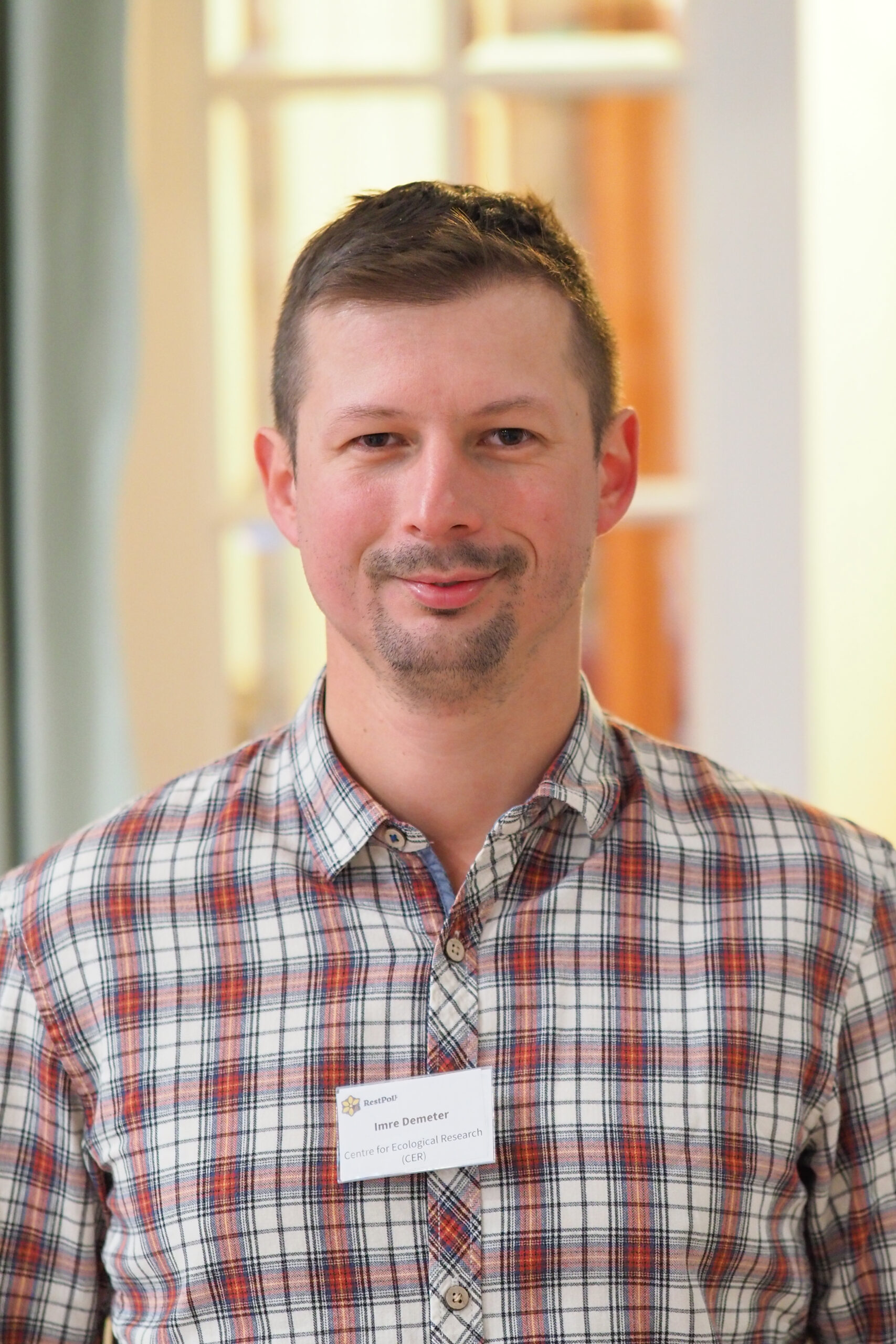
Imre Demeter

Bernadett Zsinka

Sándor Piross

Dóra Teplánszki

Anikó Kovács-Hostyánszki

László Tóth

György Dudás
Contact us for collaboration
Alexandra Klein
alexandra.klein@nature.uni-freiburg.de