
Pollinator restoration through co-designed measures
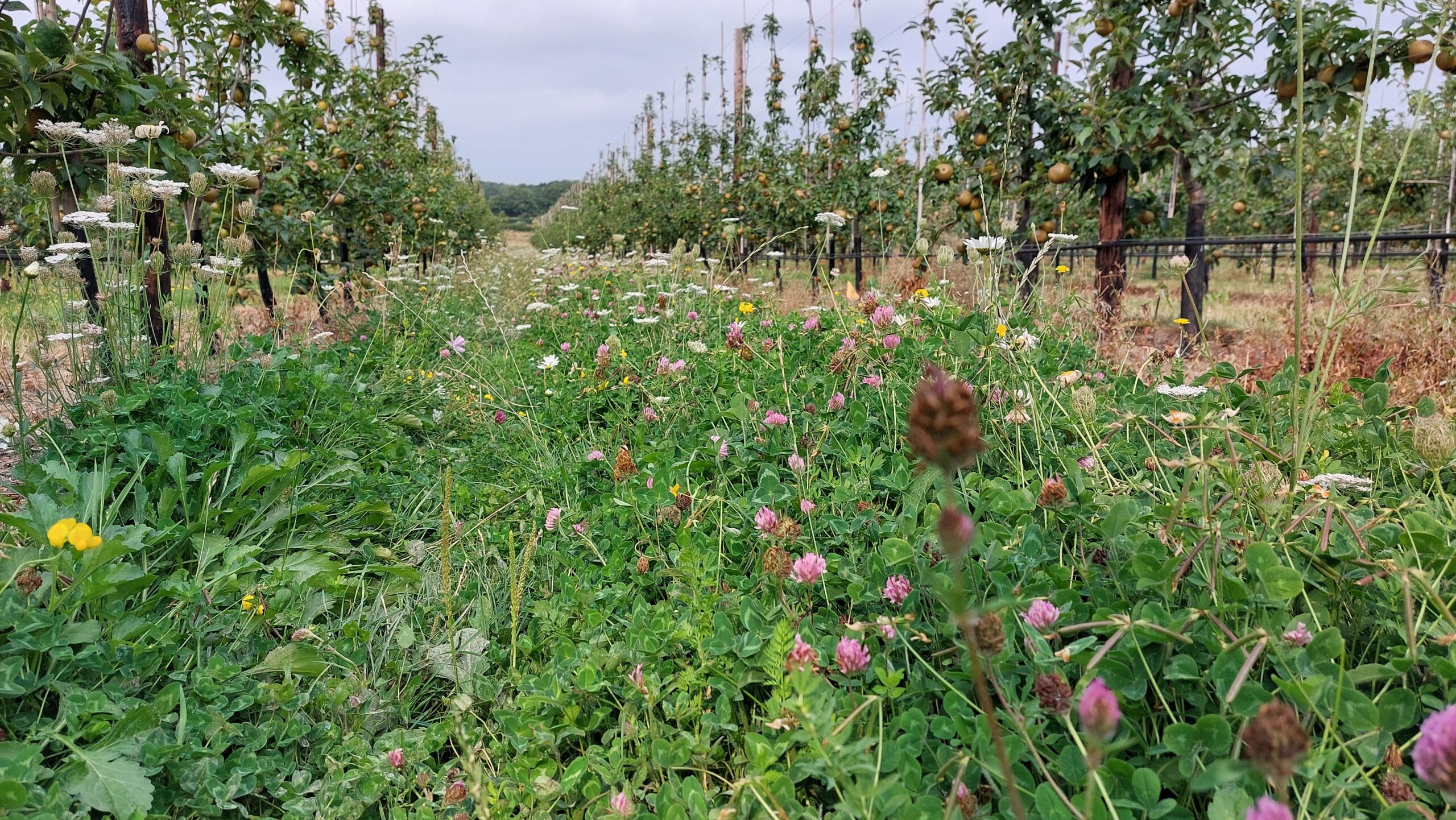
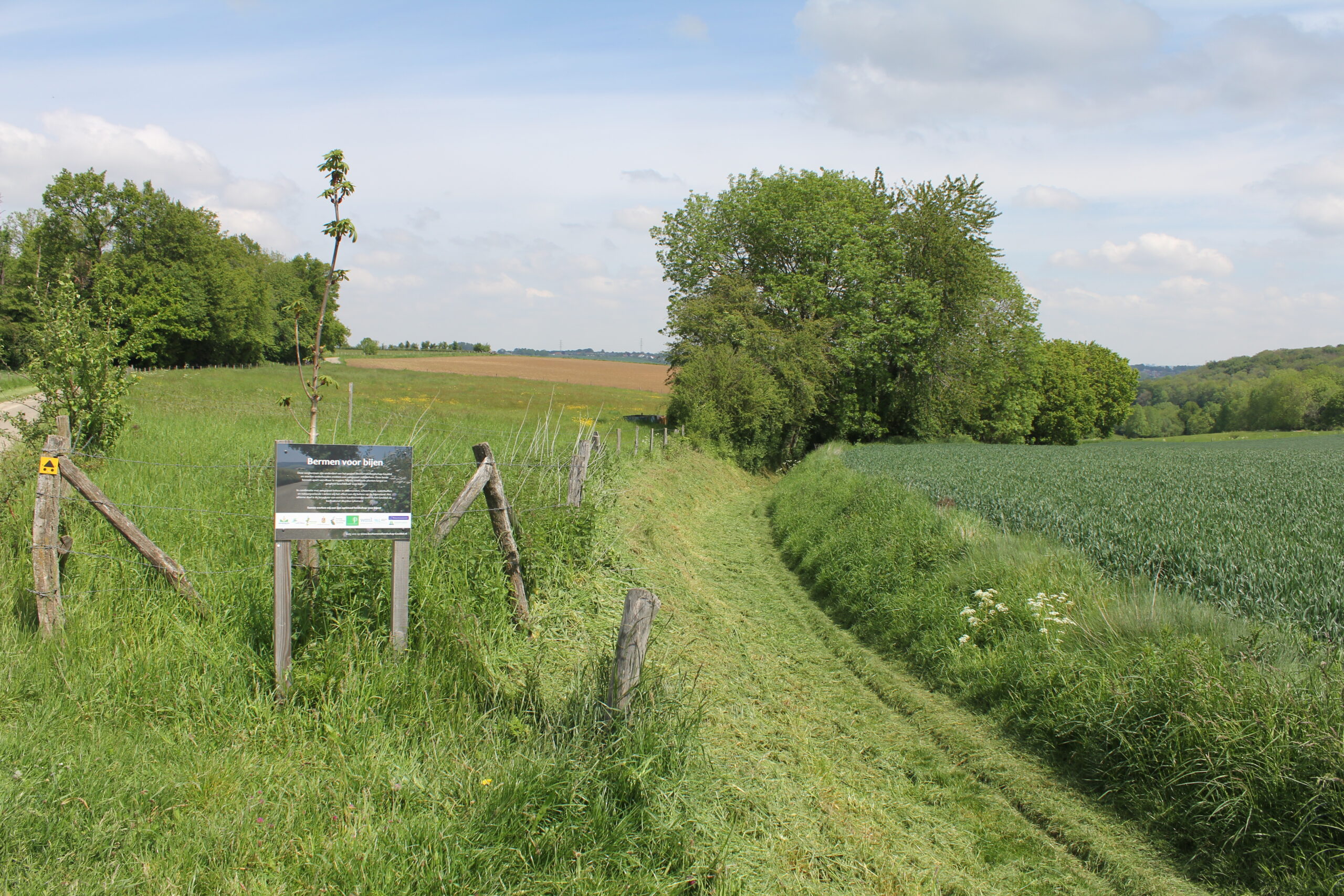
For conceptualizing an approach to revert the trend on agricultural pollinators in the EU, we created a network of 14 case study areas, comprising Living Labs that implement co-designed restoration measures for pollinators.
Living Lab Network
The case study areas include all major farming types, are located across various geographic zones and thus also cover wide ranges of species distributions within Europe. Within the case study areas, a growing number of co-designed pollinator restoration measures are being implemented and monitored, in terms of benefits for pollinators, landscape effects, and socioeconomic impacts. The details on the conceptual approach of RestPoll and its case study area network will pave the way for current and future restoration design, transdisciplinary research and to restore pollinators within Europe.
The RestPoll consortium combines the expertise of natural and social scientists, NGOs, businesses, and ministries. Stakeholders along the food value chain will be engaged through newly developed participatory approaches at diverse social, ecological, and political scales.
Central to RestPoll is the establishment of a Europe-wide network of pollinator restoration case study areas and Living Labs (LL), which are unique hubs for experimentation, demonstration, and mutual learning.
We are interested in collaborating with other research projects, institutions, or individuals who are addressing similar or related questions and could benefit from our established living lab network.


Activities within the Living Labs
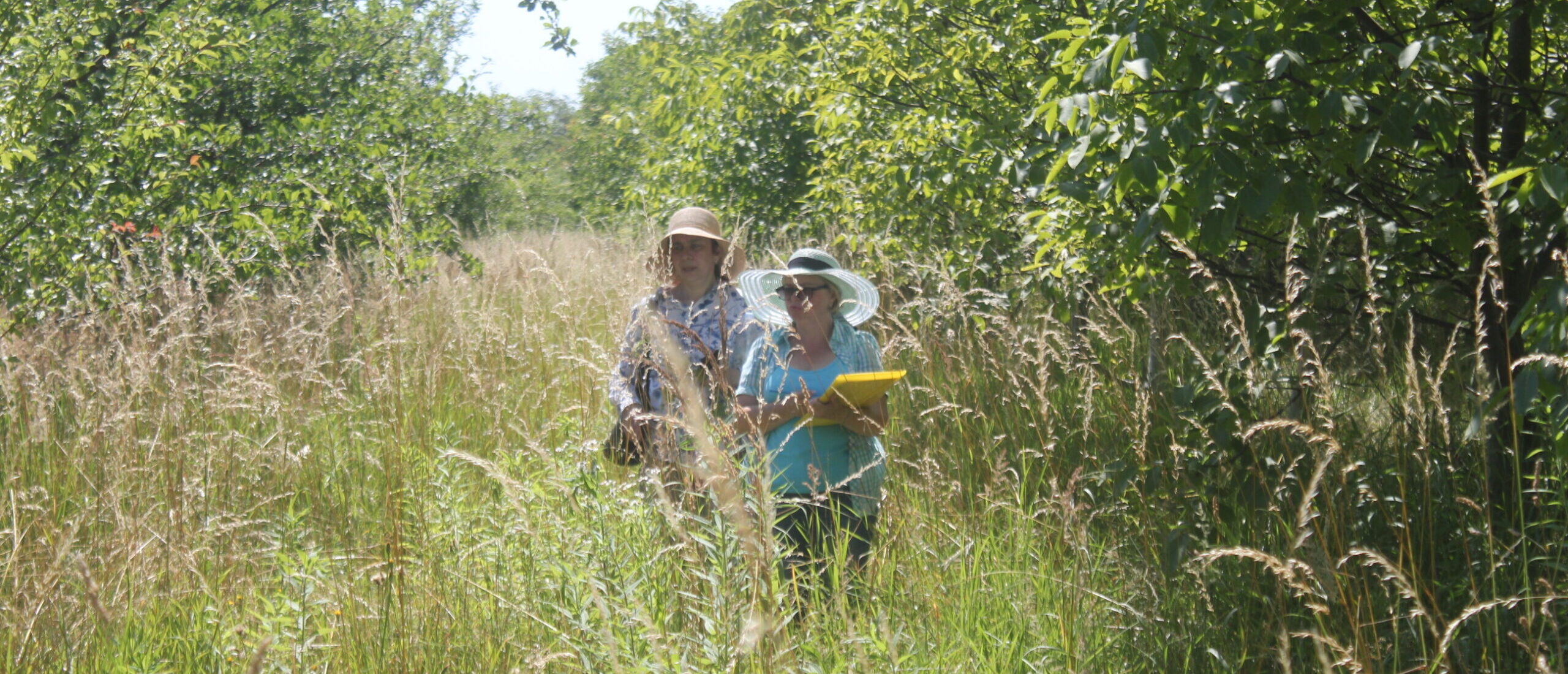
Within the Living Lab network, we are conducting an array of different activities at different levels. The first level in the center contains activities that are conducted at the living labs but coordinated by RestPoll members (i.e. pollinator monitoring). The second level contains activities that are conducted within the living lab with all stakeholders involved (i.e. workshop to discuss implementation of co-designed measures). The third level are activities that are conducted within the living lab during demonstration events, including a larger audience (i.e. workshop on horizon scan). The final level includes activities that involve the general public within the living lab vicinity (i.e. testing of feasibility of tools).
Level 1
- Pollinator and vegetation monitoring
- Pollination monitoring
- Measuring the effect of co-design
- Rapid assessment of plants and pollinators
- Evaluate interactions among landscape-scale drivers and local restoration measures on pollinators
- Identify synergies and opportunities for improvements of current restoration implementations
Level 2
- Assess co-benefits of pollinators restoration measures and the direct and indirect impacts of restoration measures on bio-economy
- Develop and test a novel instrument based on Payments for Restoration-mediated Pollination Services (PRPS)
- Establishing and monitoring progress and knowledge flow with the Living Lab
- Assessing enabling conditions for pollinator restoration measures
Level 3
- Horizon scanning of strengths, weaknesses, opportunities & threats for pollinator restorations
Level 4
- Assessing the awareness of pollinators and willingness to protect them
- Estimate the value added by wild pollinators to the food value chain
- Test and evaluate tools for the RestPoll toolbox of restoration methods
- Survey consumer willingness to purchase biodiversity-friendly products
- Understanding and evaluating the co-design of pollinator-friendly labels
Living Lab Network
The RestPoll Living Lab Network consists of 17 different areas within 14 European countries.
Partner
Case study area
Collaborating partners


Upcoming events within the Living Labs
We are hosting several demonstration events and workshops within the network. Visit our event calendar for upcoming events. You can stay up to date with activities and events in our living lab by signing up for our newsletter!
Pollinator restoration through co-designed measures
For conceptualizing an approach to revert the trend on agricultural pollinators in the EU, we created a network of 14 case study areas, comprising Living Labs that implement co-designed restoration measures for pollinators.
Living Lab Network
The case study areas include all major farming types, are located across various geographic zones and thus also cover wide ranges of species distributions within Europe. Within the case study areas, a growing number of co-designed pollinator restoration measures are being implemented and monitored, in terms of benefits for pollinators, landscape effects, and socioeconomic impacts. The details on the conceptual approach of RestPoll and its case study area network will pave the way for current and future restoration design, transdisciplinary research and to restore pollinators within Europe.
The RestPoll consortium combines the expertise of natural and social scientists, NGOs, businesses, and ministries. Stakeholders along the food value chain will be engaged through newly developed participatory approaches at diverse social, ecological, and political scales.
Central to RestPoll is the establishment of a Europe-wide network of pollinator restoration case study areas and Living Labs (LL), which are unique hubs for experimentation, demonstration, and mutual learning.
We are interested in collaborating with other research projects, institutions, or individuals who are addressing similar or related questions and could benefit from our established living lab network.


Activities within the Living Labs
Within the Living Lab network, we are conducting an array of different activities at different levels. The first level in the center contains activities that are conducted at the living labs but coordinated by RestPoll members (i.e. pollinator monitoring). The second level contains activities that are conducted within the living lab with all stakeholders involved (i.e. workshop to discuss implementation of co-designed measures). The third level are activities that are conducted within the living lab during demonstration events, including a larger audience (i.e. workshop on horizon scan). The final level includes activities that involve the general public within the living lab vicinity (i.e. testing of feasibility of tools).
Level 1
- Pollinator and vegetation monitoring
- Pollination monitoring
- Measuring the effect of co-design
- Rapid assessment of plants and pollinators
- Evaluate interactions among landscape-scale drivers and local restoration measures on pollinators
- Identify synergies and opportunities for improvements of current restoration implementations
Level 2
- Assess co-benefits of pollinators restoration measures and the direct and indirect impacts of restoration measures on bio-economy
- Develop and test a novel instrument based on Payments for Restoration-mediated Pollination Services (PRPS)
- Establishing and monitoring progress and knowledge flow with the Living Lab
- Assessing enabling conditions for pollinator restoration measures
Level 3
- Horizon scanning of strengths, weaknesses, opportunities & threats for pollinator restorations
Level 4
- Assessing the awareness of pollinators and willingness to protect them
- Estimate the value added by wild pollinators to the food value chain
- Test and evaluate tools for the RestPoll toolbox of restoration methods
- Survey consumer willingness to purchase biodiversity-friendly products
- Understanding and evaluating the co-design of pollinator-friendly labels
Living Lab Network
The RestPoll Living Lab Network consists of 17 different areas within 14 European countries.
Partner
Case study area
","
","
","
","
","
","
","In collaboration with University of Freiburg
","
","
","
","
","
","
","
","
","
"];var region_background = {"CH" : "#4f2b17","DE" : "#4f2b17","DK" : "#4f2b17","ES" : "#4f2b17","FR" : "#4f2b17","GB" : "#4f2b17","GR" : "#4f2b17","HU" : "#4f2b17","IT" : "#4f2b17","LV" : "#4f2b17","NL" : "#4f2b17","NO" : "#4f2b17","SE" : "#4f2b17","UA" : "#4f2b17"};var region_popup = {};var map = new jvm.Map({ container: $("#rvm-map-europe-plus-merc-map-93038"), map: "rvm-map-europe-plus-merc" , regionsSelectable: false, regionStyle: { initial: { fill: "#f7b01c", "fill-opacity": 1, stroke: "#ffffff", "stroke-width": 1}, hover: { "fill": "#f7b01c", "fill-opacity" : 1 }, selected: { fill: "#FFFFFF" }}, backgroundColor: "#ffffff", zoomButtons: true, zoomOnScroll: false, onRegionOver : function(event, code){region_over = true ;if( code == "HU" ) { document.body.style.cursor = "pointer" ; }if( region_over ) { event.preventDefault(); } }, onRegionOut: function(element, code, region) { document.body.style.cursor = "default"; }, onRegionClick : function(event, code){if(code == "HU") { window.location.assign("https://restpoll.eu/country/hungary/" ) ; }}, series: { regions: [{ values: region_background, attribute: "fill" }]}, markers: markers, onMarkerTipShow: function(event, label, code) {label.html( label.html() + '' + marker_popup[code] );}, onMarkerClick: function(event, index) {if( markers[index].weburl ) { window.location.assign( markers[index].weburl ) ; } }, markerStyle: {initial: { fill: "#e87321", stroke: "#000000" }}});});})(jQuery);( function($) {var map_container_width = $( "#rvm-map-europe-plus-merc-map-93038").width();var map_container_height = map_container_width / 0.8991364447962; $("#rvm-map-europe-plus-merc-map-93038").css( { "height" : map_container_height , "max-height" : map_container_height } );$( window ).resize( function() {var map_container_width = $( "#rvm-map-europe-plus-merc-map-93038").width();var map_container_height = map_container_width / 0.8991364447962; $( "#rvm-map-europe-plus-merc-map-93038").css( { "height" : map_container_height , "max-height" : map_container_height } );});})(jQuery);( function($) {$( document ).ready( function() { /*console.log("Document ready to rock!");*/ var checkExist = setInterval( function() { /*function to check if map points have shown up*/ if ( $( "#rvm-map-europe-plus-merc-map-93038 .jvectormap-marker" ).length ) { //console.log( "Vector Map Points Exist!" ); $( ".jvectormap-marker" ).addClass( "rvm_show_markers_effect" ); /*adds the class to move markers off screen using css*/ rvm_show_markers(); /*call function rvm_show_markers*/ clearInterval( checkExist ); } }, 200 ); // check every 200ms to see if map points have shown up function isScrolledIntoView( elem ) { /*function to check if element is displayed on screen*/ var docViewTop = $( window ).scrollTop(); var docViewBottom = docViewTop + $( window ).height(); var elemTop = $( elem ).offset().top; var elemBottom = elemTop + $( elem ).height(); return ( ( elemBottom = docViewTop ) ); } function rvm_show_markers() { $( window ).scroll( function() { //scroll function $( "#rvm-map-europe-plus-merc-map-93038 .jvectormap-marker" ).each( function() { //bind top of jvectormap to scrolling if ( isScrolledIntoView( this ) === true) { //console.log("Element Visible On Screen!"); var $rvm_markers = $( "#rvm-map-europe-plus-merc-map-93038 .jvectormap-marker"); /*array of markers*/ var time = 500; /*time interval in ms between showing them*/ $rvm_markers.each( function() { var self = this; /*setTimeout does not recognize "this" so we use a variable*/ setTimeout( function(){ $( self ).removeClass( "rvm_show_markers_effect" ); }, time) time += 500; }); } }); /*map container function*/ }); /*scroll function*/ } /*rvm_show_markers function*/ });})(jQuery);
Collaborating partners


Upcoming events within the Living Labs
We are hosting several demonstration events and workshops within the network. Visit our event calendar for upcoming events. You can stay up to date with activities and events in our living lab by signing up for our newsletter!
Join us for the 3rd training session for Living Labs on February 21 at 10:30 CET.
Join us for WP4 and T4.1 Bimonthly meeting on December 19th, 2025 at 10:00 AM (CET).
https://iamm-ciheam-org.zoom.us/j/84064777610?pwd=zBhmZxI9iY9ZkASaJqZ3wTkntyAIpD.1
The WP4 & T4.1 Bimonthly Meetings, which will take place Friday, 13th February at 10:00 AM (Paris).
Zoom Meeting Link: [ https://iamm-ciheam-org.zoom.us/j/84064777610?pwd=zBhmZxI9iY9ZkASaJqZ3wTkntyAIpD.1 | https://iamm-ciheam-org.zoom.us/j/84064777610?pwd=zBhmZxI9iY9ZkASaJqZ3wTkntyAIpD.1 ]
Interested in collaborating with us?
Thank you for your interest in collaborating with us and our network! To ensure a smooth evaluation process, we ask that you please submit a proposal. In a one- to two-page proposal, please:
- Clearly state the objectives of the proposed collaboration and how they align with our goals.
- Describe the methods and practices you propose to achieve the collaboration objectives, including any specific activities or strategies and identify which Living Labs you would like to use.
- Outline the expected outcomes and benefits for stakeholders and for scientists involved in the collaboration
- Provide a suggested timeline for the collaboration, including major milestones and deliverables.
- List any relevant literature or prior work (if applicable) that supports your proposal.
Have you completed all the steps above? Then submit your proposal via email
with the subject line “RestPoll Living Lab collaboration proposal"
</br.
We will review your proposal within 4 weeks.
Contact us for collaboration
We are interested in collaborating with other research projects, institutions, or individuals who are addressing similar or related questions and could benefit from our established living lab network.
Pollinator restoration through co-designed measures
For conceptualizing an approach to revert the trend on agricultural pollinators in the EU, we created a network of 14 case study areas, comprising Living Labs that implement co-designed restoration measures for pollinators.
Living Lab Network
The case study areas include all major farming types, are located across various geographic zones and thus also cover wide ranges of species distributions within Europe. Within the case study areas, a growing number of co-designed pollinator restoration measures are being implemented and monitored, in terms of benefits for pollinators, landscape effects, and socioeconomic impacts. The details on the conceptual approach of RestPoll and its case study area network will pave the way for current and future restoration design, transdisciplinary research and to restore pollinators within Europe.
The RestPoll consortium combines the expertise of natural and social scientists, NGOs, businesses, and ministries. Stakeholders along the food value chain will be engaged through newly developed participatory approaches at diverse social, ecological, and political scales.
Central to RestPoll is the establishment of a Europe-wide network of pollinator restoration case study areas and Living Labs (LL), which are unique hubs for experimentation, demonstration, and mutual learning.
We are interested in collaborating with other research projects, institutions, or individuals who are addressing similar or related questions and could benefit from our established living lab network.


Activities within the Living Labs
Within the Living Lab network, we are conducting an array of different activities at different levels. The first level in the center contains activities that are conducted at the living labs but coordinated by RestPoll members (i.e. pollinator monitoring). The second level contains activities that are conducted within the living lab with all stakeholders involved (i.e. workshop to discuss implementation of co-designed measures). The third level are activities that are conducted within the living lab during demonstration events, including a larger audience (i.e. workshop on horizon scan). The final level includes activities that involve the general public within the living lab vicinity (i.e. testing of feasibility of tools).
Level 1
- Pollinator and vegetation monitoring
- Pollination monitoring
- Measuring the effect of co-design
- Rapid assessment of plants and pollinators
- Evaluate interactions among landscape-scale drivers and local restoration measures on pollinators
- Identify synergies and opportunities for improvements of current restoration implementations
Level 2
- Assess co-benefits of pollinators restoration measures and the direct and indirect impacts of restoration measures on bio-economy
- Develop and test a novel instrument based on Payments for Restoration-mediated Pollination Services (PRPS)
- Establishing and monitoring progress and knowledge flow with the Living Lab
- Assessing enabling conditions for pollinator restoration measures
Level 3
- Horizon scanning of strengths, weaknesses, opportunities & threats for pollinator restorations
Level 4
- Assessing the awareness of pollinators and willingness to protect them
- Estimate the value added by wild pollinators to the food value chain
- Test and evaluate tools for the RestPoll toolbox of restoration methods
- Survey consumer willingness to purchase biodiversity-friendly products
- Understanding and evaluating the co-design of pollinator-friendly labels
Living Lab Network
The RestPoll Living Lab Network consists of 17 different areas within 14 European countries.
Partner
Case study area
","
","
","
","
","
","
","In collaboration with University of Freiburg
","
","
","
","
","
","
","
","
","
"];var region_background = {"CH" : "#4f2b17","DE" : "#4f2b17","DK" : "#4f2b17","ES" : "#4f2b17","FR" : "#4f2b17","GB" : "#4f2b17","GR" : "#4f2b17","HU" : "#4f2b17","IT" : "#4f2b17","LV" : "#4f2b17","NL" : "#4f2b17","NO" : "#4f2b17","SE" : "#4f2b17","UA" : "#4f2b17"};var region_popup = {};var map = new jvm.Map({ container: $("#rvm-map-europe-plus-merc-map-93038"), map: "rvm-map-europe-plus-merc" , regionsSelectable: false, regionStyle: { initial: { fill: "#f7b01c", "fill-opacity": 1, stroke: "#ffffff", "stroke-width": 1}, hover: { "fill": "#f7b01c", "fill-opacity" : 1 }, selected: { fill: "#FFFFFF" }}, backgroundColor: "#ffffff", zoomButtons: true, zoomOnScroll: false, onRegionOver : function(event, code){region_over = true ;if( code == "HU" ) { document.body.style.cursor = "pointer" ; }if( region_over ) { event.preventDefault(); } }, onRegionOut: function(element, code, region) { document.body.style.cursor = "default"; }, onRegionClick : function(event, code){if(code == "HU") { window.location.assign("https://restpoll.eu/country/hungary/" ) ; }}, series: { regions: [{ values: region_background, attribute: "fill" }]}, markers: markers, onMarkerTipShow: function(event, label, code) {label.html( label.html() + '' + marker_popup[code] );}, onMarkerClick: function(event, index) {if( markers[index].weburl ) { window.location.assign( markers[index].weburl ) ; } }, markerStyle: {initial: { fill: "#e87321", stroke: "#000000" }}});});})(jQuery);( function($) {var map_container_width = $( "#rvm-map-europe-plus-merc-map-93038").width();var map_container_height = map_container_width / 0.8991364447962; $("#rvm-map-europe-plus-merc-map-93038").css( { "height" : map_container_height , "max-height" : map_container_height } );$( window ).resize( function() {var map_container_width = $( "#rvm-map-europe-plus-merc-map-93038").width();var map_container_height = map_container_width / 0.8991364447962; $( "#rvm-map-europe-plus-merc-map-93038").css( { "height" : map_container_height , "max-height" : map_container_height } );});})(jQuery);( function($) {$( document ).ready( function() { /*console.log("Document ready to rock!");*/ var checkExist = setInterval( function() { /*function to check if map points have shown up*/ if ( $( "#rvm-map-europe-plus-merc-map-93038 .jvectormap-marker" ).length ) { //console.log( "Vector Map Points Exist!" ); $( ".jvectormap-marker" ).addClass( "rvm_show_markers_effect" ); /*adds the class to move markers off screen using css*/ rvm_show_markers(); /*call function rvm_show_markers*/ clearInterval( checkExist ); } }, 200 ); // check every 200ms to see if map points have shown up function isScrolledIntoView( elem ) { /*function to check if element is displayed on screen*/ var docViewTop = $( window ).scrollTop(); var docViewBottom = docViewTop + $( window ).height(); var elemTop = $( elem ).offset().top; var elemBottom = elemTop + $( elem ).height(); return ( ( elemBottom = docViewTop ) ); } function rvm_show_markers() { $( window ).scroll( function() { //scroll function $( "#rvm-map-europe-plus-merc-map-93038 .jvectormap-marker" ).each( function() { //bind top of jvectormap to scrolling if ( isScrolledIntoView( this ) === true) { //console.log("Element Visible On Screen!"); var $rvm_markers = $( "#rvm-map-europe-plus-merc-map-93038 .jvectormap-marker"); /*array of markers*/ var time = 500; /*time interval in ms between showing them*/ $rvm_markers.each( function() { var self = this; /*setTimeout does not recognize "this" so we use a variable*/ setTimeout( function(){ $( self ).removeClass( "rvm_show_markers_effect" ); }, time) time += 500; }); } }); /*map container function*/ }); /*scroll function*/ } /*rvm_show_markers function*/ });})(jQuery);
Collaborating partners


Upcoming events within the Living Labs
We are hosting several demonstration events and workshops within the network. Visit our event calendar for upcoming events. You can stay up to date with activities and events in our living lab by signing up for our newsletter!
Join us for the 3rd training session for Living Labs on February 21 at 10:30 CET.
Join us for WP4 and T4.1 Bimonthly meeting on December 19th, 2025 at 10:00 AM (CET).
https://iamm-ciheam-org.zoom.us/j/84064777610?pwd=zBhmZxI9iY9ZkASaJqZ3wTkntyAIpD.1
The WP4 & T4.1 Bimonthly Meetings, which will take place Friday, 13th February at 10:00 AM (Paris).
Zoom Meeting Link: [ https://iamm-ciheam-org.zoom.us/j/84064777610?pwd=zBhmZxI9iY9ZkASaJqZ3wTkntyAIpD.1 | https://iamm-ciheam-org.zoom.us/j/84064777610?pwd=zBhmZxI9iY9ZkASaJqZ3wTkntyAIpD.1 ]
Interested in collaborating with us?
Thank you for your interest in collaborating with us and our network! To ensure a smooth evaluation process, we ask that you please submit a proposal. In a one- to two-page proposal, please:
- Clearly state the objectives of the proposed collaboration and how they align with our goals.
- Describe the methods and practices you propose to achieve the collaboration objectives, including any specific activities or strategies and identify which Living Labs you would like to use.
- Outline the expected outcomes and benefits for stakeholders and for scientists involved in the collaboration
- Provide a suggested timeline for the collaboration, including major milestones and deliverables.
- List any relevant literature or prior work (if applicable) that supports your proposal.
Have you completed all the steps above? Then submit your proposal via email
with the subject line “RestPoll Living Lab collaboration proposal"
</br.
We will review your proposal within 4 weeks.
Contact us for collaboration
We are interested in collaborating with other research projects, institutions, or individuals who are addressing similar or related questions and could benefit from our established living lab network.
Pollinator restoration through co-designed measures
For conceptualizing an approach to revert the trend on agricultural pollinators in the EU, we created a network of 14 case study areas, comprising Living Labs that implement co-designed restoration measures for pollinators.
Living Lab Network
The case study areas include all major farming types, are located across various geographic zones and thus also cover wide ranges of species distributions within Europe. Within the case study areas, a growing number of co-designed pollinator restoration measures are being implemented and monitored, in terms of benefits for pollinators, landscape effects, and socioeconomic impacts. The details on the conceptual approach of RestPoll and its case study area network will pave the way for current and future restoration design, transdisciplinary research and to restore pollinators within Europe.
The RestPoll consortium combines the expertise of natural and social scientists, NGOs, businesses, and ministries. Stakeholders along the food value chain will be engaged through newly developed participatory approaches at diverse social, ecological, and political scales.
Central to RestPoll is the establishment of a Europe-wide network of pollinator restoration case study areas and Living Labs (LL), which are unique hubs for experimentation, demonstration, and mutual learning.
We are interested in collaborating with other research projects, institutions, or individuals who are addressing similar or related questions and could benefit from our established living lab network.


Activities within the Living Labs
Within the Living Lab network, we are conducting an array of different activities at different levels. The first level in the center contains activities that are conducted at the living labs but coordinated by RestPoll members (i.e. pollinator monitoring). The second level contains activities that are conducted within the living lab with all stakeholders involved (i.e. workshop to discuss implementation of co-designed measures). The third level are activities that are conducted within the living lab during demonstration events, including a larger audience (i.e. workshop on horizon scan). The final level includes activities that involve the general public within the living lab vicinity (i.e. testing of feasibility of tools).
Level 1
- Pollinator and vegetation monitoring
- Pollination monitoring
- Measuring the effect of co-design
- Rapid assessment of plants and pollinators
- Evaluate interactions among landscape-scale drivers and local restoration measures on pollinators
- Identify synergies and opportunities for improvements of current restoration implementations
Level 2
- Assess co-benefits of pollinators restoration measures and the direct and indirect impacts of restoration measures on bio-economy
- Develop and test a novel instrument based on Payments for Restoration-mediated Pollination Services (PRPS)
- Establishing and monitoring progress and knowledge flow with the Living Lab
- Assessing enabling conditions for pollinator restoration measures
Level 3
- Horizon scanning of strengths, weaknesses, opportunities & threats for pollinator restorations
Level 4
- Assessing the awareness of pollinators and willingness to protect them
- Estimate the value added by wild pollinators to the food value chain
- Test and evaluate tools for the RestPoll toolbox of restoration methods
- Survey consumer willingness to purchase biodiversity-friendly products
- Understanding and evaluating the co-design of pollinator-friendly labels
Living Lab Network
The RestPoll Living Lab Network consists of 17 different areas within 14 European countries.
Partner
Case study area
","
","
","
","
","
","
","In collaboration with University of Freiburg
","
","
","
","
","
","
","
","
","
"];var region_background = {"CH" : "#4f2b17","DE" : "#4f2b17","DK" : "#4f2b17","ES" : "#4f2b17","FR" : "#4f2b17","GB" : "#4f2b17","GR" : "#4f2b17","HU" : "#4f2b17","IT" : "#4f2b17","LV" : "#4f2b17","NL" : "#4f2b17","NO" : "#4f2b17","SE" : "#4f2b17","UA" : "#4f2b17"};var region_popup = {};var map = new jvm.Map({ container: $("#rvm-map-europe-plus-merc-map-93038"), map: "rvm-map-europe-plus-merc" , regionsSelectable: false, regionStyle: { initial: { fill: "#f7b01c", "fill-opacity": 1, stroke: "#ffffff", "stroke-width": 1}, hover: { "fill": "#f7b01c", "fill-opacity" : 1 }, selected: { fill: "#FFFFFF" }}, backgroundColor: "#ffffff", zoomButtons: true, zoomOnScroll: false, onRegionOver : function(event, code){region_over = true ;if( code == "HU" ) { document.body.style.cursor = "pointer" ; }if( region_over ) { event.preventDefault(); } }, onRegionOut: function(element, code, region) { document.body.style.cursor = "default"; }, onRegionClick : function(event, code){if(code == "HU") { window.location.assign("https://restpoll.eu/country/hungary/" ) ; }}, series: { regions: [{ values: region_background, attribute: "fill" }]}, markers: markers, onMarkerTipShow: function(event, label, code) {label.html( label.html() + '' + marker_popup[code] );}, onMarkerClick: function(event, index) {if( markers[index].weburl ) { window.location.assign( markers[index].weburl ) ; } }, markerStyle: {initial: { fill: "#e87321", stroke: "#000000" }}});});})(jQuery);( function($) {var map_container_width = $( "#rvm-map-europe-plus-merc-map-93038").width();var map_container_height = map_container_width / 0.8991364447962; $("#rvm-map-europe-plus-merc-map-93038").css( { "height" : map_container_height , "max-height" : map_container_height } );$( window ).resize( function() {var map_container_width = $( "#rvm-map-europe-plus-merc-map-93038").width();var map_container_height = map_container_width / 0.8991364447962; $( "#rvm-map-europe-plus-merc-map-93038").css( { "height" : map_container_height , "max-height" : map_container_height } );});})(jQuery);( function($) {$( document ).ready( function() { /*console.log("Document ready to rock!");*/ var checkExist = setInterval( function() { /*function to check if map points have shown up*/ if ( $( "#rvm-map-europe-plus-merc-map-93038 .jvectormap-marker" ).length ) { //console.log( "Vector Map Points Exist!" ); $( ".jvectormap-marker" ).addClass( "rvm_show_markers_effect" ); /*adds the class to move markers off screen using css*/ rvm_show_markers(); /*call function rvm_show_markers*/ clearInterval( checkExist ); } }, 200 ); // check every 200ms to see if map points have shown up function isScrolledIntoView( elem ) { /*function to check if element is displayed on screen*/ var docViewTop = $( window ).scrollTop(); var docViewBottom = docViewTop + $( window ).height(); var elemTop = $( elem ).offset().top; var elemBottom = elemTop + $( elem ).height(); return ( ( elemBottom = docViewTop ) ); } function rvm_show_markers() { $( window ).scroll( function() { //scroll function $( "#rvm-map-europe-plus-merc-map-93038 .jvectormap-marker" ).each( function() { //bind top of jvectormap to scrolling if ( isScrolledIntoView( this ) === true) { //console.log("Element Visible On Screen!"); var $rvm_markers = $( "#rvm-map-europe-plus-merc-map-93038 .jvectormap-marker"); /*array of markers*/ var time = 500; /*time interval in ms between showing them*/ $rvm_markers.each( function() { var self = this; /*setTimeout does not recognize "this" so we use a variable*/ setTimeout( function(){ $( self ).removeClass( "rvm_show_markers_effect" ); }, time) time += 500; }); } }); /*map container function*/ }); /*scroll function*/ } /*rvm_show_markers function*/ });})(jQuery);
Collaborating partners


Upcoming events within the Living Labs
We are hosting several demonstration events and workshops within the network. Visit our event calendar for upcoming events. You can stay up to date with activities and events in our living lab by signing up for our newsletter!
Join us for the 3rd training session for Living Labs on February 21 at 10:30 CET.
Join us for WP4 and T4.1 Bimonthly meeting on December 19th, 2025 at 10:00 AM (CET).
https://iamm-ciheam-org.zoom.us/j/84064777610?pwd=zBhmZxI9iY9ZkASaJqZ3wTkntyAIpD.1
The WP4 & T4.1 Bimonthly Meetings, which will take place Friday, 13th February at 10:00 AM (Paris).
Zoom Meeting Link: [ https://iamm-ciheam-org.zoom.us/j/84064777610?pwd=zBhmZxI9iY9ZkASaJqZ3wTkntyAIpD.1 | https://iamm-ciheam-org.zoom.us/j/84064777610?pwd=zBhmZxI9iY9ZkASaJqZ3wTkntyAIpD.1 ]
Interested in collaborating with us?
Thank you for your interest in collaborating with us and our network! To ensure a smooth evaluation process, we ask that you please submit a proposal. In a one- to two-page proposal, please:
- Clearly state the objectives of the proposed collaboration and how they align with our goals.
- Describe the methods and practices you propose to achieve the collaboration objectives, including any specific activities or strategies and identify which Living Labs you would like to use.
- Outline the expected outcomes and benefits for stakeholders and for scientists involved in the collaboration
- Provide a suggested timeline for the collaboration, including major milestones and deliverables.
- List any relevant literature or prior work (if applicable) that supports your proposal.
Have you completed all the steps above? Then submit your proposal via email
with the subject line “RestPoll Living Lab collaboration proposal"
</br.
We will review your proposal within 4 weeks.
Contact us for collaboration
We are interested in collaborating with other research projects, institutions, or individuals who are addressing similar or related questions and could benefit from our established living lab network.
Interested in collaborating with us?
Thank you for your interest in collaborating with us and our network! To ensure a smooth evaluation process, we ask that you please submit a proposal. In a one- to two-page proposal, please:
- Clearly state the objectives of the proposed collaboration and how they align with our goals.
- Describe the methods and practices you propose to achieve the collaboration objectives, including any specific activities or strategies and identify which Living Labs you would like to use.
- Outline the expected outcomes and benefits for stakeholders and for scientists involved in the collaboration
- Provide a suggested timeline for the collaboration, including major milestones and deliverables.
- List any relevant literature or prior work (if applicable) that supports your proposal.
Have you completed all the steps above? Then submit your proposal via email
with the subject line “RestPoll Living Lab collaboration proposal"
We will review your proposal within 4 weeks.
Contact us for collaboration
We are interested in collaborating with other research projects, institutions, or individuals who are addressing similar or related questions and could benefit from our established living lab network.